
Alpharetta Wood Flooring brings more than 20 years of work to wood flooring in Kirkwood, where a job is rarely a blank slate and usually means a floor with decades of history under the finish. We refinish, repair and install hardwood for homeowners, sellers and landlords, and we start every project by reading the floor in front of us rather than quoting from a price sheet.
That reading covers moisture, wear and whatever earlier owners did to the boards. A floor that cupped over a humid summer gets a moisture meter before any sander touches it, and a board lost to subterranean termites is cut out and woven in with matching stock once the pest control company has treated. Nothing gets filled and hidden.
Stain choices happen on your own boards, in your own light, with samples laid down before any color is picked. Staircases are priced one tread at a time, and clear finishes are chosen by their federal VOC category. The sections below cover what changes about floor work in this part of Atlanta, and why the house type matters as much as the address.
Floor Work Across 1,788 Historic Buildings
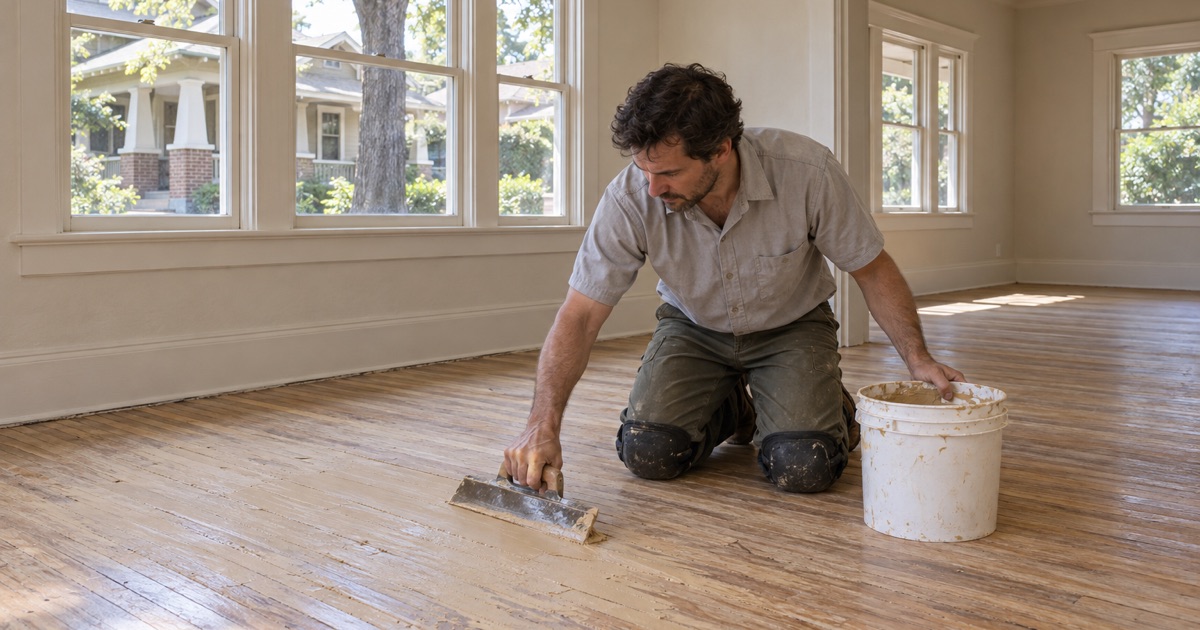
Kirkwood Historic District was entered in the National Register of Historic Places on September 24, 2009. Its nomination counts 1,788 contributing buildings, and the Georgia Historic Preservation Division is reported to rank it the largest historic district in the state by number of contributing resources. We treat that ranking as reported rather than settled, but the scale behind it is plain on any walk down the grid.
For a flooring crew, scale means variety. The nomination describes house types popular in Georgia from the 1870s through the 1960s, and industrial buildings such as the Pratt-Pullman Yards, dated to about 1906 and 1926, stand along the rail corridor at the edge of the neighborhood. Two neighbors can own floors installed decades apart, milled differently and finished with different products, so we never assume the house next door tells us what is under your rug.
Reading the Floor Before Quoting It
Every quote here starts with a look at what the boards have already been through. We check for traffic lanes worn through the finish, hollow spots underfoot, board gapping along seasonal lines and old pet urine stains that darkened the grain. Each of those decides whether a floor gets a screen and recoat, a full sanding or a round of board replacement first.
We also check how much wood is left above the tongue before promising a full sand. A floor that has been sanded several times may have enough left for one more pass or may not, and finding that out after the drum sander starts is the wrong order. When the remaining wood is thin, we say so plainly and price the alternatives side by side.
Mixed Eras, One Consistent Process
Because the district holds so many house types, our process stays the same even when the materials do not. We take moisture readings, lay stain samples on the actual floor and walk you through sheen level choices before work begins. The only thing that varies is what we find, which is why we test before committing to a grit sequence or a finish.
The same care covers the clear coat. We compare waterborne polyurethane, oil-modified polyurethane and hardwax oil on durability, cure time and odor, and we select the product by its federal VOC category under 40 CFR 59 Subpart D. The floor-coating number that often gets quoted applies to opaque coatings, not the clear finish going on your boards.
Looking for wood-flooring closer to South Downtown? See South Downtown Wood-Flooring.
1920s Bungalows and Victorian Cottages on the Streetcar Grid
The nomination names bungalows from the 1920s as one of the more prevalent house types in Kirkwood, and it places the major period of development in that decade. Houses from those years expand outward on a grid from the older core around Hosea Williams Drive, once called Boulevard Drive. The South Decatur streetcar line opened in 1891 along that road, Woodbine Avenue and Oakview Road.
Streetcar-era bungalows tend to carry narrow tongue and groove boards that have seen generations of foot traffic, refinishing and sometimes paint. That combination is where our work slows down on purpose. A floor of that age can hide old patches, face nails and mismatched sections from earlier owners, and we would rather find them with a flashlight than with a sander.
Sanding an Older Floor Safely
A house built before 1978 falls under federal lead-safe rules, and every 1920s bungalow in the district qualifies. Before sanding, we confirm the build year and check painted surfaces such as baseboards, thresholds and stair risers, following the EPA RRP Rule under TSCA Title VI. Dustless sanding helps, but it does not replace setting up the work the way those rules require.
Repairing Rather Than Replacing
When a bungalow floor has a damaged area, we weave replacement boards in with stock matched for species, width and grain rather than covering the whole room with new flooring. Where subterranean termites were the cause, the pest control company treats first, and we look for frass and mud tubes along the edges before any cut. Water popping before stain helps new and old boards take color evenly.
Sellers facing a closing date often meet this problem through an Official Georgia Wood Infestation Inspection Report. If the report notes damaged flooring, we work to your timeline with a documented repair, so the floor is not the item holding up the sale. We coordinate with the treatment schedule so the repair follows the termite letter rather than racing it.
Queen Anne and Folk Victorian Cottages
Older houses sit closer to the historic core, including Queen Anne, Folk Victorian, Pyramid and New South cottages from the district’s earliest decades. These cottages often have smaller rooms, more doorways and more transitions, so a refinish involves more hand work at thresholds, reducers and quarter round. We use an orbital sander at the edges, where a drum sander would gouge the boards.
1940s American Small Houses
The second prevalent type in the nomination is the American Small House from the 1940s. These compact houses fill many streets away from the core, and in the ZCTA 30317 census figures we use as a labeled proxy for Kirkwood, the 1940s is the largest single year-built bucket at 18.3 percent. That proxy reaches beyond the district, so we read it as a rough guide rather than a count.
Small houses from that decade usually have fewer rooms and straighter runs, which makes them good candidates for a full sand and refinish. Over the years many had carpet laid on top, and pulling the carpet pad and tack strip can reveal boards worth saving under staple holes and adhesive. We look before anyone decides the old floor is a loss.
Carpet, Laminate and Vinyl Removal
When an owner wants builder-grade carpet, laminate or luxury vinyl plank gone, we remove it and assess what is underneath before recommending anything. Sometimes the existing hardwood can be sanded and finished; sometimes it is too far gone, and new solid hardwood goes down with the right expansion gap and flooring cleats. Stairs are part of the same job when you want them to be.
Replacing stair treads, risers and stair nosing is its own work with its own labor, which is why square-foot pricing does not fit a staircase. We itemize each step so you can see where the cost sits. That also makes it easy to decide which steps get refinished and which get replaced.
Matching Species and Color
In a 1940s room, red oak and white oak behave differently under stain, and older finishes often push the wood toward an orange oak tone over time. We lay stain samples on your floor so you see the result against your walls and windows. If you want hickory, maple or wide plank boards in an added room, we compare Janka hardness and seasonal movement before anything is ordered.
Atlanta Address, DeKalb County Location
Kirkwood is part of the City of Atlanta, yet the whole neighborhood sits in DeKalb County. It was incorporated as an independent town in 1899 and annexed to Atlanta between 1922 and 1924, so today it is an Atlanta neighborhood within NPU-O with no government of its own. We put DeKalb on every estimate and damage record, because an Atlanta address leads some people to assume otherwise.
The DeKalb location shows up in weather data too. Kirkwood falls in National Weather Service forecast zone GAZ045, named DeKalb, which is where we look when planning a job around humid stretches or storms. Acclimation periods and dehumidifier use depend on the indoor readings we take, but the forecast shapes when we schedule the finish coats.
Moisture Before Sanding
Cupping and crowning are the two words we hear most in summer. A cupped floor has edges higher than the centers, and sanding it flat before the moisture source is fixed leaves a crowned floor once the boards dry out. We read the boards and the space below them with a moisture meter, find the source, and only then plan the sanding.
Water damage from a supply line, a dishwasher or a storm gets the same order of work. We trace the water, dry the area, measure until the readings settle and document each room for the adjuster before replacing a board. Buckling and water stains are recorded as found, which gives your insurer a clear account of the loss.
Owners, Sellers and Landlords
In the ZCTA 30317 proxy, 67.3 percent of occupied homes are owner-occupied, and 95.6 percent of owner households live in detached houses. Most floors here belong to people living in their own single house, but rental homes are part of the mix. Our work adjusts to who is paying and what they need the floor to do next.
For landlords, we write itemized floor-damage estimates that can be set against the move-out inspection list, separating normal wear from pet damage, sun fade and deep gouges. For owners in a condominium or a community with an association, we confirm written approval before starting, since any interior flooring rule comes from your own declaration rather than state law.
- 20+ Years on Wood Floors
- Moisture Readings Before Sanding
- Stairs Quoted Tread by Tread










