
Alpharetta Wood Flooring offers screen and recoat for hardwood floors in Alpharetta, GA and has refreshed worn finishes for 20+ years, serving surrounding cities including Roswell, Milton, Peachtree Corners, Norcross and Sandy Springs. A screen and recoat lightly abrades the existing finish and adds a fresh protective coat, bringing back a dull, scratched floor without sanding it to bare wood.
It is the most overlooked service in floor care. Done at the right time, before traffic wears through the finish, it keeps the wood itself from ever being exposed, and it pushes back the day a full sanding is needed. Done at the wrong time, on a floor worn to bare wood or coated in polish, it wastes money or peels off in weeks.
So we start by telling you honestly whether your floor is a candidate. If it needs a full refinish, we say so; if a recoat will do the job, it costs far less, takes about a day and leaves much less disruption behind.
When a Screen and Recoat Is the Right Choice
Dull, Lightly Scratched Finish
The ideal candidate is a floor whose finish has gone dull and hazy from everyday wear, with fine scratches that sit in the finish rather than the wood. The floor still looks like one color, with no gray patches where the finish is gone. A fresh coat restores the sheen and protection.
Run your hand over the scratches. If they feel shallow and only show up in low-angled light, they are almost always in the finish. If they are white or gray, or catch a fingernail, they probably reach the wood.
Floors Between Full Sandings
Every full sanding removes some wood, and a solid board can only be sanded so many times before the tongue is exposed. Recoating on a schedule, before the finish wears through, keeps the wood intact and saves those sandings for when they are really needed. For floors that have already been sanded several times, it can add many years of life.
Engineered Floors With a Thin Wear Layer
Some engineered floors have a wear layer too thin to sand safely at all. For those, a screen and recoat is the main way to renew the surface. We check the wear layer at a vent or edge before recommending anything more aggressive.
A recoat is also a good way to refresh a floor before moving into a house or listing it, when a full refinish would be more disruption than the situation needs.
When It Is Not Enough
Worn Traffic Lanes and Bare Wood
Where the finish has worn through in a hallway or kitchen path, the wood has turned gray from dirt and moisture. A new coat over that area seals the discoloration in and leaves a visibly different lane. Those floors need a full sanding.
Stains, Pet Damage and Water Marks
Black pet urine stains, dark water stains and sun fade are in the wood, not the finish, so recoating does nothing for them. Damaged boards have to be replaced and the floor sanded. We point out those areas so you can decide how to handle them.
Changing the Color
A recoat keeps the existing color. If you want to move away from an orange, dated oak or go darker, the old finish and stain have to come off in a full sanding. Recoating can only protect the color you already have.
If a color change is a few years off, a recoat now still makes sense. It protects the wood in the meantime, so there is more of it left to sand and stain when you are ready.
Making Sure the New Coat Bonds
Residues From Cleaners and Polish
Polishes, waxes, oil soaps and some spray cleaners leave residue that stops a new finish from bonding. A recoat over them can peel or flake within days. We ask what has been used on the floor and clean it with a product designed to remove those residues before abrading. If a floor has been waxed, a recoat with a modern finish is usually not possible without full sanding, because wax soaks into the wood grain.
Adhesion Testing
Before we coat a whole floor, we abrade and coat a small test area and check that it bonds. This is especially important on prefinished floors, whose factory finishes can be very hard and resist a new coat. Some need a special bonding product first.
Abrading the Existing Finish
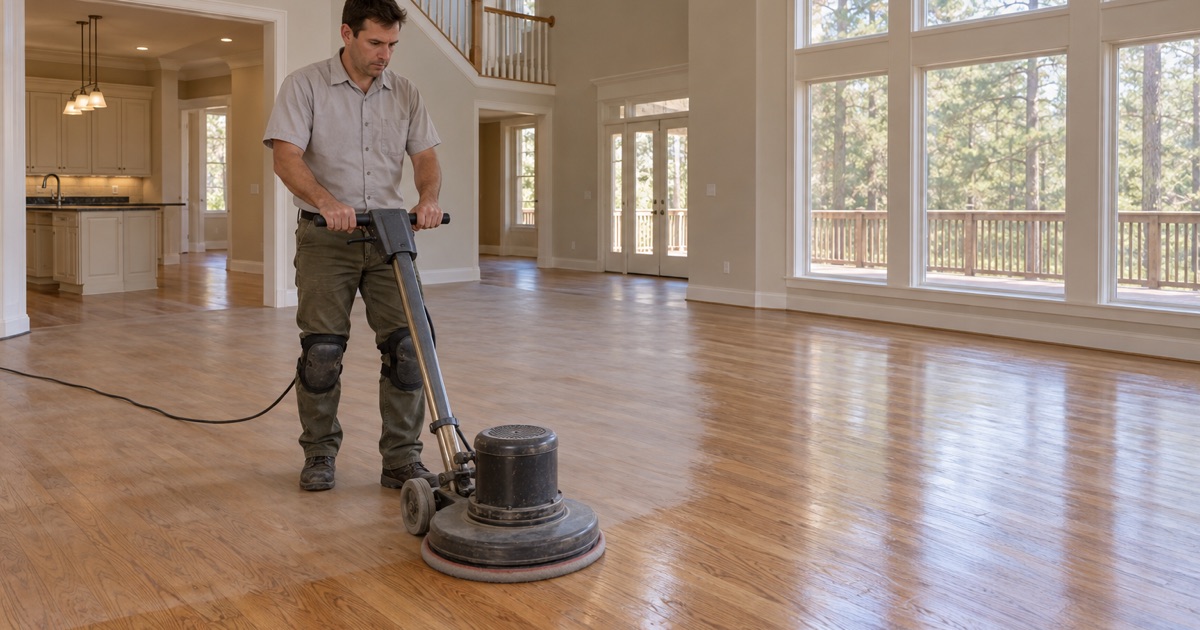
We abrade the finish with a buffer fitted with a screen or abrasive pad, which creates a fine texture for the new coat to grip. Edges and corners are abraded by hand. The dust is vacuumed and the floor tacked clean before any finish goes down.
Choosing the New Finish
Matching or Upgrading the Existing Finish
The new coat must be compatible with what is already on the floor. A waterborne polyurethane over an older oil-modified finish usually works once the surface is properly prepared, and it will not add more amber. We explain how the color may shift before you choose.
Sheen Level
A recoat is a chance to change the sheen, from gloss to satin or matte, for example. Lower sheens hide scratches and dust better, which suits households with pets and children.
Changing sheen across a whole room is simple, but the new sheen must cover every board evenly. We recoat wall to wall rather than just the worn paths, so the floor does not end up with glossy and matte patches side by side.
VOCs and Staying Home
Waterborne finishes have a milder odor and dry quickly, so most households stay home during a recoat. We choose clear finishes by the VOC category that actually applies to them under the federal rule, not by a number meant for opaque floor coatings.
- 20+ Years on Wood Floors
- Moisture Readings Before Sanding
- Stairs Quoted Tread by Tread