
Alpharetta Wood Flooring handles wood flooring in Woodstock for owners whose houses are young by Georgia standards but whose floors are starting to show their age. After 20+ years of sanding, repairing and installing hardwood, we know the pattern well: a floor that looked perfect at the closing table now carries traffic lanes, gray scratches by the back door, and a finish worn thin where the kitchen meets the family room.
Most of that work is a first refinish rather than a replacement. A site-finished floor on its first coat of polyurethane still has most of its wood above the tongue, so sanding it back to bare and finishing it fresh usually costs far less than tearing it out. We check that remaining wood before we quote, and we tell you plainly whether a floor has room for a sanding.
Other homeowners want a change rather than a restoration: carpet off the stairs, laminate or vinyl plank swapped for solid hardwood, or a new color over a floor that has turned orange. We do all of it, and we plan each job around the house as it stands today, including its HOA rules and whoever is still living in it while the work happens.
Where Woodstock’s Newer Floors Stand Today
Woodstock’s housing is overwhelmingly recent. The 2024 American Community Survey counts 73.1 percent of the city’s homes as built in 2000 or later, and the single biggest build decade is 2000-2009 at 42.6 percent. Only 6.6 percent of homes predate 1980, and that shapes almost every floor conversation we have here.
The First Refinish Arrives
A floor laid in a mid-2000s house has had close to two decades of dogs, dining chairs and grit tracked in from the yard. On a site-finished floor that usually shows as dull traffic lanes, a finish worn to bare wood in front of the sink, and fine scratches across the main walkway. None of that means the boards are done; it means the coating is.
If the finish is worn but not through to the wood, a screen and recoat may be enough: we abrade the existing coat and lay down fresh polyurethane without cutting into the wood itself. Where wear has reached bare boards or gray patches have set in, a full sanding with a drum sander and orbital sander, run through a proper grit sequence, is the honest answer.
Measuring What Is Left Above the Tongue
Before any sander touches a Woodstock floor, we pull a floor register or a threshold and look at how much wood sits above the tongue and groove. Solid hardwood can take several sandings over its life, but a thin engineered wear layer may allow one or none. Guessing is how floors get sanded through, so we measure first and quote second.
That check matters more in newer houses than owners expect. A single home can mix site-finished solid hardwood in the main rooms with prefinished or glue-down engineered boards elsewhere, and the two need different plans. We identify each floor room by room so you are not paying to sand a floor that only needed a recoat.
Cupping, Crowning and Moisture
Newer does not mean immune to moisture. A floor that cupped during a humid Georgia summer tells us water is reaching the underside of the boards, whether from a leaking supply line, a dishwasher, poor drainage or indoor humidity left unchecked. We read the boards with a moisture meter and find that source before anything else.
Sanding a cupped floor flat while it is still wet only trades one problem for another: once the boards dry, the sanded edges sink and the floor crowns. We wait for readings to settle, sometimes with a dehumidifier running, and then decide whether the floor needs sanding, board replacement or nothing more than time.
Looking for wood-flooring closer to Lilburn? See Lilburn Wood-Flooring.
Townhome and Attached-Home Floors in Woodstock
Attached homes are a real share of the market here. The same census release counts 17.1 percent of Woodstock’s owner households in one-unit attached homes, the category that captures most townhomes, and 64.0 percent of occupied homes are owner-occupied. Those owners make their own floor decisions, but they make them around shared walls, narrow floor plans and association rules.
Stairs Priced Tread by Tread
A townhome often stacks its living space over several floors, which puts a staircase at the center of almost every flooring project. We quote stairs tread by tread rather than by the square foot, because each step needs its own stair tread, riser and stair nosing fitted and finished by hand.
Carpeted stairs converted to hardwood are one of the most requested changes we make in attached homes. We pull the carpet pad and tack strip, check what sits underneath, and install treads that match the hallway above, so the stairs and the landing read as one floor instead of two separate projects.
Replacing Carpet, Laminate and Vinyl Plank
If your townhome or subdivision house has carpet, laminate or luxury vinyl plank in the main rooms, we replace it with hardwood, stairs included. The subfloor gets checked for flatness and fastening first; then we lay solid hardwood with flooring cleats or staples, leave a proper expansion gap at the walls, and finish the transitions with a reducer and quarter round.
Species choice follows how the house is used. Red oak and white oak take stain evenly and hide wear well, hickory brings a high Janka hardness for busy households with pets, and maple gives a lighter, cleaner look. We lay stain samples on your own floor, in your own light, so the color you pick is the color you live with.
Terrace Levels and Lower Floors
If your home has a terrace level, those lower rooms need a different product. Solid wood does not belong below grade, so we match engineered wood to the upstairs floor for terrace-level rooms, over a vapor retarder where conditions call for one. That keeps the look continuous without inviting the cupping solid boards suffer in damp rooms.
Glue-down engineered and floating floor installations both have a place on a lower level, and the choice depends on the moisture readings, the subfloor and the height at the door transitions. When a lower room has taken water before, we take readings over more than one visit, because a single dry-week reading can mislead.
Floor Plans for First-Time Buyers
Woodstock grew 46.7 percent between 2010 and 2020, and the City of Woodstock commissioned a citywide housing market study to plan for what comes next. KB Advisory Group’s case-study page, dated September 15, 2022, lists recommendations to preserve the city’s lower-cost housing stock and to help first-time homebuyers with down payments and closing costs.
For a first-time buyer in a 2000s house, the floors are often the most visible sign of the previous owner’s years there. We help new owners decide what to fix now, what can wait, and what should be left alone until they have lived through a season and seen how the floors behave.
Starting With a Recoat or a Partial Refinish
A tight first-year budget rarely stretches to new floors throughout, and it rarely needs to. A screen and recoat can freshen a sound finish for a fraction of a full sanding, while a refinish of only the main living area handles the worst traffic lanes. We price both options side by side so you can choose with the numbers in front of you.
Pet urine stains, water stains and sun fade are the problems buyers most often inherit. Some come out with sanding; deep urine stains that have turned the wood black usually do not, and those boards are cut out and replaced. We show you which is which before the work starts, not halfway through it.
Termite Findings Before Closing
When a termite inspection before closing turns up damaged flooring, the seller is usually the one racing the calendar. The Official Georgia Wood Infestation Inspection Report can note subterranean termites, mud tubes or frass, and the damaged boards then need repair before the sale can close cleanly. We work to the closing date and document what we replaced.
Our order of work never changes: the pest control company treats first, then we cut out the damaged boards and weave in matching stock, one board at a time. We never fill termite damage or cover it with a patch, because the next inspector will find it, and so will the next buyer.
Homes Built Before 1978
In the small share of Woodstock homes built before 1978, we check the build year and any painted surfaces before sanding, because the EPA RRP Rule reaches homes of that age. Baseboards, stair risers and painted trim can all be disturbed during floor work, so we plan containment before the first pass rather than after it.
Working Within Master-Planned Communities
Much of Woodstock’s newer housing sits in planned subdivisions and townhome communities with homeowners associations, and that changes how a floor job starts. Any interior flooring rule comes from your own declaration, not from state law, so we confirm your HOA’s written approval before work begins, whether the community operates under the Georgia Property Owners’ Association Act or the Georgia Condominium Act.
Approval, Access and Scheduling
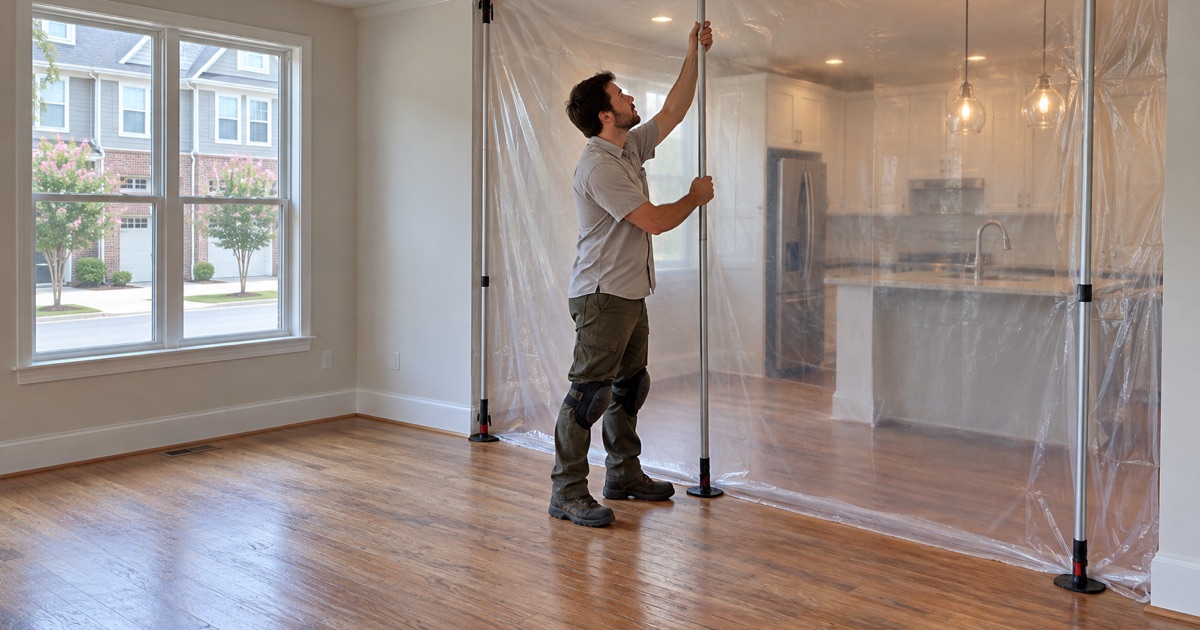
Some associations only concern themselves with exterior work; others set rules on work hours, dumpster placement or noise in shared-wall buildings. We read what your declaration and your board actually require, then schedule the job around it. Dustless sanding helps in attached homes, where fine dust drifting into a shared hallway quickly becomes a neighbor’s complaint.
Owners in planned communities sometimes ask whether an interior species or color has to match the neighbors. The answer sits in your own declaration, and we would rather read it with you before the job than argue about it with a management company afterward.
Water Damage and the Adjuster
Water from a supply line, a dishwasher or a storm is a common reason owners call us to a newer home. We trace the source, dry the floor, and measure moisture before replacing a single board. Every room gets documented with readings and photos, so your adjuster sees the same evidence we do.
Buckling, hollow spots and board gapping often follow a leak, and they do not always show up in the room where the water started. We check adjoining rooms and closets with the meter, then write a repair scope that covers every affected board rather than only the ones you can see.
Finishes and Rental Townhomes
We choose clear finishes by their federal VOC category under 40 CFR 59 Subpart D, not by the floor-coating number that only applies to opaque coatings. Waterborne polyurethane dries clear and keeps red oak from ambering, oil-modified polyurethane deepens color, and hardwax oil suits owners who prefer spot repairs. We match sheen level to the wear the floor will see.
Not every townhome is owner-occupied. For landlords, we write itemized floor-damage estimates that line up against the move-out inspection list, board by board and room by room. That gives you a documented number for a deposit discussion instead of a single lump figure nobody can check.
- 20+ Years on Wood Floors
- Moisture Readings Before Sanding
- Stairs Quoted Tread by Tread










